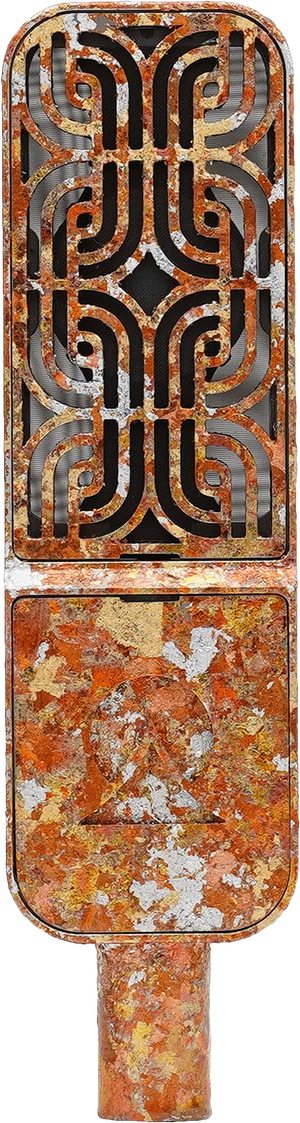
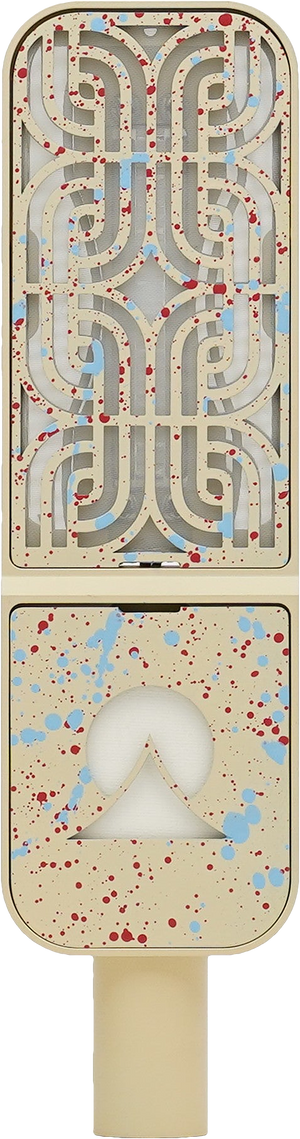
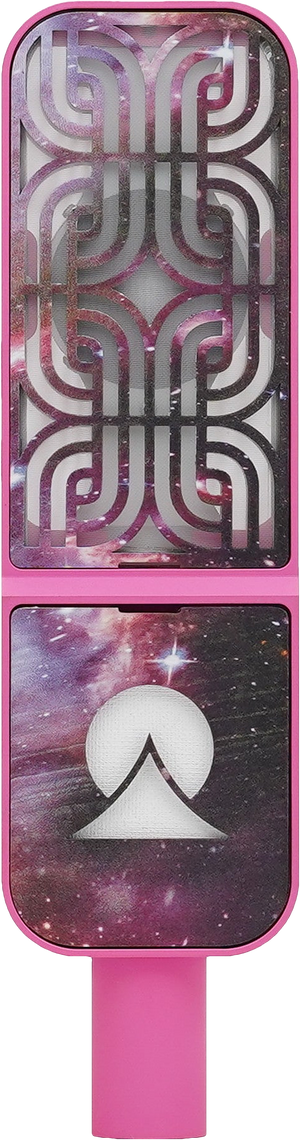
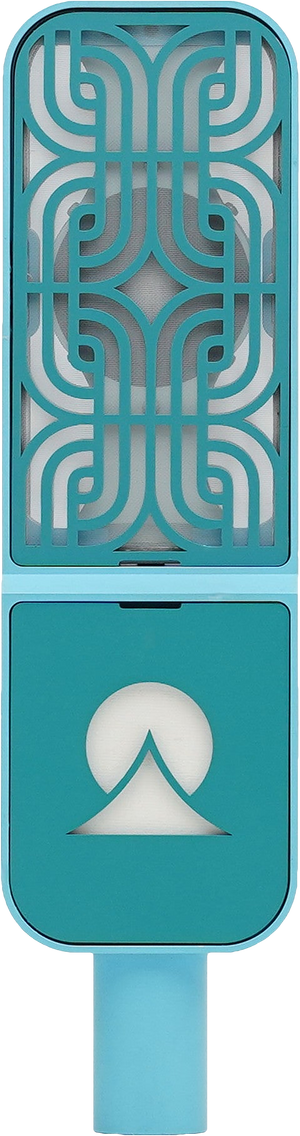
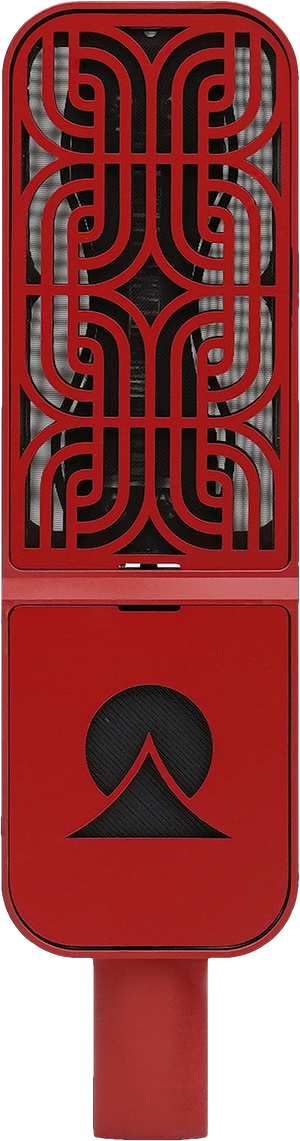
Meet the Ohmie, our dual voltage condenser microphone

A 48V/80V switch on the back of the Ohmie changes how its capsule responds. Here's what it does, how it sounds and where it fits next to the Ohma mics.

By Ohma World · October 20, 2026 · 3 min read

The Ohmie on a stand against a pink background
Watch the launch video · 0:38

There's a small switch on the back of the Ohmie. One side says 48V. The other says 80V. Most of what makes this microphone ours comes down to what happens when you flip it.

The Ohmie is a large-diaphragm cardioid condenser microphone from Ohma World. Its 48V/80V switch changes the voltage on the capsule itself, which changes how the capsule responds to sound. It runs on standard 48V phantom power, comes with a custom isolation clip, and is designed and assembled in our workshop in East Los Angeles. It's $349 and shipping now from ohmaworld.com.

Explore the Ohmie

What does the 48V/80V switch do?

A condenser capsule is a thin diaphragm sitting close to a metal backplate, with a voltage held between them. When sound moves the diaphragm, the distance between the two changes, and that change becomes your signal. The voltage between them is called the polarization voltage.

Most condenser mics run their capsule at one fixed voltage. The Ohmie gives you two. At 48V, the capsule runs at the voltage your phantom power supplies. At 80V, a step-up circuit inside the mic raises it. A higher voltage means a stronger field between the diaphragm and backplate, so the same movement of air produces more signal, and the capsule behaves differently.

The switch doesn't reroute your sound. The signal takes the same circuit in both modes. Only the capsule changes.

How each setting sounds, and how to choose between them

The 48V/80V switch on the back of the Ohmie The Ohmie's switch set to 80V

Dual Voltage · try the switch

Natural. Relaxed. Balanced.

The source keeps its movement and natural dynamics, with the full low end and a smooth top intact.

How people describe 48V

smoothchillopeneasy on the ear

Neither setting is the default, and neither is better. They're two characters to choose between, the same way you might choose between two mics on the same source. You can flip the switch any time. It makes a small pop when you do, so turn your speakers or headphones down first.

Hear 48V and 80V side by side

We recorded five sources at both settings for the Ohmie listening library: electric guitar, acoustic guitar, vocals, drums and electric bass. Every clip is level-matched, with no EQ or compression, so what you hear between 48V and 80V is the capsule, not a volume difference.

Listen to 48V vs 80V

In the studio and out of it

The Ohmie is a side-address mic. Sing or play into the side with the logo. The capsule sits on built-in shock absorption inside the body, and the included custom isolation clip holds it on your stand, so there's no separate shock mount to buy or set up.

We've used it on vocals, voiceover and podcasts, acoustic and electric guitar, bass, drums, and outside on field recordings at a creek and in the redwoods. It runs on standard 48V phantom power from an interface, a preamp or a field recorder, and we've recorded with it on Zoom and Sound Devices recorders. Plug in an XLR cable, turn on phantom power and the Ohmie makes its own 80V inside.

It has a lot of output, so on loud sources like a kick drum or a cranked amp, switch on the pad on your interface or preamp.

ohmie-launch-angela-pop-filter.jpg

Snaps on · sold separately

The magnetic pop filter

The Ohmie Pop Filter snaps onto the logo side with a hidden magnet and moves with the mic when you adjust it. It comes with a desk stand and two picks. We make and assemble it here in LA.

Built on the same bench as every Ohma

We're working musicians and engineers, and the Ohmie is designed, assembled and tested in our East LA workshop, on the same bench where we build the Ohma Ribbon and Ohma Condenser. Inside is an edge-terminated cardioid capsule and a transformerless circuit, in a black aluminum body.

How the Ohmie fits next to the Ohma mics

The Ohma Ribbon and Ohma Condenser are our modular microphones. We make and tune their capsules and ribbons here, and they take our patented swappable magnetic screens, so you can change both the sound and the look of the mic. Each one is painted in our paint shop in the color you choose.

The Ohmie is a different kind of mic. It comes in black only, it has one fixed grille, and its flexibility lives in the switch: two capsule characters in one microphone.

They solve different problems, and plenty of Ohma owners are adding an Ohmie rather than choosing one over the other. If you're deciding between them, compare our microphones.

The Ohmie · $349

Price, warranty and shipping

In the box

The Ohmie and its custom isolation clip. No XLR cable.

Warranty

One year, extended to two years when you register your mic.

Returns

30 days on every mic.

Shipping

Free worldwide.

Dealers

Ask any Ohma dealer about the Ohmie, even if they don't have one on the shelf.

Watch it in use

Our launch video is a snapshot of where the Ohmie has been lately: home studios, a podcast set, the redwoods and the city. Watch on YouTube or on Instagram.

Follow along at @ohmiebyohma.

Get the Ohmie

Questions

What is the Ohmie?

The Ohmie is a large-diaphragm, side-address cardioid condenser microphone from Ohma World, with a switch that runs its capsule at 48V or 80V. It's $349.

Do I need 80V phantom power to use 80V mode?

No. The Ohmie runs on standard 48V phantom power. A step-up circuit inside the mic raises the capsule voltage to 80V when you flip the switch.

Is 80V better than 48V?

No. They're two characters, and neither is the default. 48V is natural, relaxed and balanced. 80V is immediate, punchy and defined, and makes the capsule about 5 dB more sensitive with no added self-noise.

Can I switch between 48V and 80V while recording?

Yes, any time. It makes a small pop, so turn your speakers or headphones down first.

Does the Ohmie work with a portable recorder?

Yes, with any recorder that has an XLR input and 48V phantom power. We've used it with Zoom and Sound Devices recorders.

Do I need a shock mount?

No. The capsule sits on built-in shock absorption, and the included custom isolation clip mounts it to your stand.

Is the pop filter included?

No. The Ohmie Pop Filter is $99 on its own, or $399 with the mic as The Ohmie + Pop Filter.

Does it come with a cable?

No. The box has the Ohmie and its custom isolation clip. Use any XLR cable.

What colors does the Ohmie come in?

Black only. Custom colors are part of the Ohma Ribbon and Ohma Condenser.

How is the Ohmie different from the Ohma Condenser?

The Ohma Condenser uses a capsule we make and tune in our shop, takes our swappable magnetic screens and comes in the color you choose. The Ohmie has a transformerless circuit, one black finish and a 48V/80V switch. They're built for different needs; see Compare our microphones.

Where is the Ohmie made?

It's designed, assembled and tested in our workshop in East Los Angeles.

What's the warranty and return policy?

One year, or two years when you register your mic. Every mic has 30-day returns.

What do I do on loud sources?

The Ohmie has a lot of output. On a kick drum or a loud amp, switch on the pad on your interface or preamp.